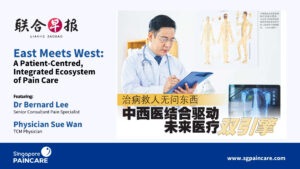
As featured on STORM-ASIA: Physician Sue Wan joined consultant pain specialist Dr Bernard Lee on STORM-ASIA’s WED WEB CHAT — a weekly panel series hosted by veteran journalist Kannan Chandran, discussing business, healthcare, and lifestyle topics for the Singapore audience. Watch past sessions at https://youtu.be/1Kuq4ONqnZE
Chronic pain rarely comes with a tidy explanation. Ask five different practitioners what’s causing a patient’s back pain, and you might get five different answers — not because anyone is wrong, but because pain itself is more complicated than a single scan or symptom can capture.
That was the central theme of a recent STORM-ASIA WED WEB CHAT session, moderated by Kannan Chandran, where Physician Sue Wan joined consultant pain specialist Dr Bernard Lee — founder of Singapore Paincare Centre and developer of the Painostic diagnostic approach — and a guest speaker who has lived with chronic pain since a workplace injury, to discuss how pain is diagnosed, misunderstood, and treated in Singapore today.
Why Doesn’t Pain Always Match the Injury?
Pain doesn’t always correspond to its underlying cause in a straightforward, linear way. A minor sprain can sometimes produce severe pain, while a more serious injury may settle quietly. Dr Lee described this using the analogy of blind men each feeling a different part of an elephant — every practitioner may correctly identify a problem area without necessarily seeing the whole picture.
This is exactly where a TCM assessment adds value. Rather than treating pain as a single mechanical issue, TCM considers multiple contributing factors at once: physical injury, emotional state, sleep quality, and lifestyle habits. “In my clinical experience, patients whose sleep and mood have been affected by their pain often take longer to recover than those with a more positive outlook,” says Physician Sue — which is why a TCM assessment looks beyond the injury site alone.
Is TCM a Replacement for Western Treatment, or a Complement?
Short answer: According to Physician Sue Wan, TCM works best as a complement to Western treatment, particularly during rehabilitation — not as a replacement for urgent or structural medical care.
| Recovery Phase | Western Approach | TCM’s Role |
|---|---|---|
| Acute injury (e.g. muscle tear, fracture) | Diagnosis, surgery if needed, medication | Supportive only. Structural injuries should receive conventional treatment first. |
| Post-surgery / rehabilitation | Physiotherapy (active rehabilitation to rebuild strength and mobility) | Acupuncture and tuina (passive treatments that improve circulation and support recovery) |
| Persistent pain with unclear cause | Comprehensive evaluation by a pain specialist using a multi-modal approach | Syndrome differentiation to determine whether symptoms stem from blocked circulation, underlying weakness, or other imbalances. |
| Long-term maintenance | Regular monitoring and follow-up care | Personalised herbal medicine, lifestyle advice, and ongoing wellness support. |
“Physio is an active movement — it helps increase your mobility and strengthen your muscles. TCM, at the same time, is more or less a slightly more passive treatment,” explains Physician Sue. Used together, she notes, patients often recover more comprehensively than with either approach alone.
How Does Acupuncture Actually Help With Pain?
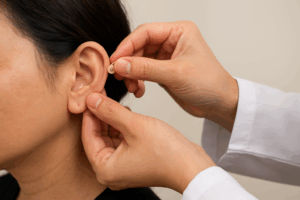
Physician Sue explains that acupuncture may help pain in two main ways: it aims to improve circulation to the affected area, and the insertion of the needle itself can prompt a local immune response. The specific points and herbal support she prescribes depend on the individual’s underlying pattern — whether their pain stems from blocked circulation or from underlying weakness. This individualised diagnosis, she says, is central to how TCM approaches pain, rather than applying the same treatment to every patient with similar symptoms.
Is Bone-Setting Safe? What Should Patients Expect?
Bone-setting is a treatment many patients ask about, and Physician Sue is careful to set expectations correctly. Proper bone-setting in a TCM context, she explains, is a gentle repositioning technique that requires significant training and experience — it is not the dramatic “cracking” some patients expect. Not every TCM physician is trained to perform it safely, she cautions, so patients should confirm a practitioner’s specific training before undergoing this treatment.
Has TCM Gained More Recognition in Singapore?
Physician Sue has seen TCM’s standing in Singapore shift over the past two decades. Where it was once viewed with scepticism, she notes that growing evidence-based research into the efficacy of specific herbs and acupuncture protocols has helped TCM move closer to being recognised as a complementary form of medicine — with acupuncture, in particular, now among the more widely accepted modalities. She is candid that TCM still has some way to go before it’s considered fully “conventional” alongside Western medicine, preferring to be upfront about that rather than overselling what TCM can do.
What’s the Best Way to Manage Pain Long-Term?
Physician Sue’s guiding principle for patients: “Everything in moderation, including moderation itself.”
A common example is saffron, a herb often recommended in TCM to support circulation. Taken sensibly, it may offer benefit; taken to excess daily, it can create new problems. The same principle applies to exercise, diet, and work habits — consistency and balance matter more than chasing a single “fix.”
Frequently Asked Questions
Common questions patients ask Physician Sue Wan about combining TCM with pain treatment:
Can TCM help with chronic pain that Western medicine hasn’t fully resolved?
TCM may help identify contributing factors — such as circulation blockages or underlying weakness — that a purely mechanical diagnosis can miss. It works best as a complement to, not a replacement for, appropriate Western medical evaluation.
Should I do TCM or physiotherapy after surgery?
Both, where appropriate. Physiotherapy is active and rebuilds strength and mobility; TCM (acupuncture, tuina) is more passive and supports circulation and recovery. Many patients benefit from using them together during rehabilitation.
Is acupuncture scientifically recognised?
Acupuncture is among the more widely studied and accepted TCM modalities, with growing evidence-based research into its efficacy for specific conditions, though it is still developing broader recognition alongside conventional medicine.
Is bone-setting the same as chiropractic cracking?
No. TCM bone-setting is a gentle repositioning technique requiring specialised training — it does not involve the forceful “cracking” associated with some other manual therapies. Not all TCM physicians are trained to perform it.
How do I know if my pain needs urgent medical attention rather than TCM?
Any pain lasting beyond six weeks to three months, or pain following a significant injury, should first be assessed by a doctor or pain specialist to rule out conditions requiring conventional treatment. TCM can then be considered as a complementary part of the recovery plan.
Considering TCM as Part of Your Recovery?
If you’re dealing with persistent pain — whether from an old injury, post-surgical recovery, or a condition that hasn’t responded fully to conventional treatment alone — a TCM assessment can help identify contributing factors that a purely mechanical diagnosis might miss.
Physician Sue Wan sees patients at Singapore Paincare TCM Wellness (Marina Square) Tuesday to Saturday, offering acupuncture, cupping, tuina, and personalised herbal support as part of an integrative approach to pain care.
Book a consultation at sgpaincaretcm.com or WhatsApp +65 9824 1758.
This article is for general educational purposes and does not replace individual medical advice. Please consult a qualified practitioner for diagnosis and treatment tailored to your condition
Media appearance: This article is based on Physician Sue Wan’s live panel appearance on STORM-ASIA’s WED WEB CHAT, a weekly webinar series covering business, healthcare, and lifestyle topics for a Singapore audience, hosted by journalist Kannan Chandran, on 1 July 2026. She appeared alongside Dr Bernard Lee, founder and CEO of Singapore Paincare Holdings Limited.