Quick Answer:
Tension headaches in Singapore are often driven by stress, long work hours, poor sleep, and dietary habits. In TCM, they are understood as a disruption of qi and blood flow through meridians surrounding the head. The location of the pain, whether at the temples, crown, forehead, or base of the skull, tells a TCM physician which meridians and in turn, which organ systems are involved. Treatments such as acupuncture, tuina, cupping, and herbal prescriptions aim to correct the underlying imbalance and reduce how often headaches return.

If you work long hours, you have probably felt it. A tight pressure across your forehead after back-to-back meetings. A dull throb at your temples by Thursday afternoon. A heavy ache at the back of your skull after staring at a screen all day.
Headaches are one of the most common health complaints among working adults here. The combination of high-pressure jobs, irregular meals, poor sleep, and not enough time to decompress creates exactly the conditions in which tension headaches thrive. Many people manage them with painkillers and push on. But when the headaches come back week after week, that approach stops being enough.
Traditional Chinese Medicine takes a different view of headaches from Western medicine. Apart from the need to reduce the pain, TCM places importance on what has gone out of balance in the body for the headache to happen. The answer, and the treatment, depends on where your headache is, what it feels like, and your accompanying lifestyle.
This article walks through how TCM understands tension headaches, why stress is such a powerful trigger, what the different treatment options are, and when a headache may mean a medical emergency.
What Is a Tension Headache?
In Western medicine, a tension headache is a dull, pressing, or tightening pain that is usually felt on both sides of the head. People often describe it as a tight band around the skull, or a feeling of pressure behind the eyes. It does not usually throb, and it does not typically get worse when you move around. This is different from a migraine, which tends to get worse with movement and has accompanying symptoms including nausea and sensitivity to light.
Tension headaches are the most common type of headache worldwide. The pain is thought to come from a combination of tightened muscles in the scalp, neck, and shoulders, together with a sensitisation of the brain’s pain pathways. Stress, poor posture, long screen hours, disrupted sleep, dehydration, and alcohol are all known contributors.
When headaches occur more than fifteen days a month, they are considered chronic, and at that point they can seriously affect sleep, work, and daily functioning. According to the National Neuroscience Institute in Singapore, tension-type headaches are the most common headache presentation seen in primary care locally, with occupational stress cited as one of the leading triggers.
How TCM Understands Different Types of Headaches
TCM does not treat all headaches the same way. Before deciding on treatment, a TCM physician looks closely at two things: the characteristic of the pain (what it feels like) and the location (where it sits). Both carry diagnostic information that shapes the entire treatment plan.
Acute vs Chronic
An acute headache that has come on recently is often linked in TCM to an external invasion, such as wind-cold or wind-heat entering the body. It tends to appear alongside neck stiffness or sensitivity to cold, bearing similarity to someone catching a cold.
A chronic, recurring headache is more likely to point to an internal imbalance. Long-term stress, overwork, irregular eating, and poor sleep gradually wear down the body’s reserves of qi, blood, and yin. Over time, the liver, which regulates the smooth flow of qi in TCM, struggles to keep qi moving properly throughout the body. The kidneys may also become depleted and no longer nourish the brain adequately, causing the headaches to keep returning.
Severe vs Mild
A sharp, stabbing pain that feels fixed in one spot is often a sign of blood stasis, meaning blood is not moving freely in the local channels. A dull, heavy, foggy headache, the kind where your head feels thick and hard to clear, is more typically linked to qi deficiency or the build-up of dampness in your body. A throbbing, distending pain, especially at the temples, often points to heat in the liver.
Headache by Location
Where your headache sits is a direct indicator of which meridians and organ systems are involved.
Sides of the head and temples
The most common pattern in stressed working adults. The gallbladder meridian runs along the sides of the head, around the ear and the two temples. Having headache at this area may involve the functions of the liver-gallbladder system. It is closely associated with built-up tension, frustration, which leads to liver qi stagnation. The pain tends to be throbbing or distending and often worsens with stress.
Top of the head (crown or vertex)
The top of the head is related to the liver meridian. Pain here often reflects liver yin deficiency or liver yang rising, and may come with dizziness, a flushed face, or irritability.
Forehead
Corresponds to the stomach and large intestine meridians. Irregular eating, skipping meals, greasy food, and alcohol can cause stomach heat or phlegm-damp to rise and produce forehead pain.
Back of the head and neck
Corresponds to the bladder meridian. Pain here is often linked to external cold, neck muscle tension, and frequently comes with stiff, aching shoulders.
Why Stress Causes Headaches: The Liver Qi Connection
In TCM, the liver is the organ system responsible for keeping qi moving smoothly throughout the body. When we are under prolonged stress, that flow stagnates. Stagnant liver qi may rise upward, producing throbbing, distending pain commonly felt at the temples. This is like a clogged pipe and when it reaches the limit, excess water will flow to places that are not desirable.
In addition, being under stress may give rise to certain unhealthy habits. Not getting enough rest or not eating right can lead to a lack of Qi and Blood (both are needed for a balanced body) which can also cause headache. Those who tend to increase alcohol intake or eat more deep-fried and oily food to combat stress may also became prone to having heat and dampness in the body, which may lead to a dull headache and that makes the headache harder to resolve on its own.
It is possible to have liver Qi stagnation coupled with heat-dampness or even Qi and Blood deficiency, which meant that treating only the stagnation sometimes produces improvement that does not hold. This is why a TCM physician looks at the whole picture and that treatment is often a multi-pronged process.
TCM Treatments for Tension Headaches
At Singapore Paincare TCM Wellness, the approach to headaches focuses on identifying and correcting the underlying imbalance, rather than suppressing the pain. Treatments are personalised to each patient’s syndrome after a full consultation.
Acupuncture
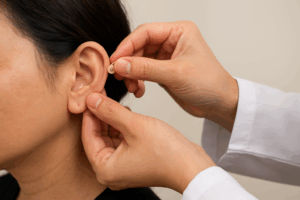
Acupuncture uses fine, sterile needles inserted at specific meridian points to regulate the flow of qi and blood, reduce muscular tension, and calm the nervous system. For headaches, points along the gallbladder, liver, bladder, and large intestine meridians are commonly selected. One example is GB20 (Fengchi), located at the base of the skull, is well-known for releasing occipital and neck tension. Regular acupuncture may help reduce both the severity and frequency of tension headaches over a treatment course.
Qi’Nergy Tuina
Qi’Nergy Tuina is the clinic’s signature manual therapy, combining traditional TCM meridian-based techniques with modern therapeutic principles. When it comes to headaches, Qi’Nergy Tuina focuses on releasing myofascial tension in the suboccipital muscles, trapezius, and cervical region. This is particularly useful where the headache has a strong muscular and postural component alongside the underlying qi imbalance.
Cupping
Cupping creates suction on the skin of the upper back, shoulders, and neck to draw stagnant qi and blood to the surface and promote local circulation. For headaches where neck and shoulder tightness is a significant driver, cupping complements acupuncture well by addressing the physical tension in the muscles that feed into the base of the skull.
Herbal Prescription
A personalised herbal formula works well to restore the balance in the body, and to also maintain the healing effects of other TCM treatments. If you are found to have liver qi stagnation, classical formulas that smooth and regulate liver qi may be used. For those that also present signs of heatiness, cooling herbs are incorporated. For Qi and/or blood deficiency cases, nourishing herbs help rebuild the Qi and blood and in time reduces or eliminates the headache.
Two patients with tension headaches can have entirely different underlying patterns, and hence they may receive entirely different formulas. The prescription is based on your individual constitution, not just your symptom.
Explore our approach to headache and migraine treatment at Singapore Paincare TCM Wellness
What to Eat and Avoid for Tension Headaches
Food has a more direct impact on headache patterns than most people expect.
To reduce or avoid:
Alcohol is the biggest dietary driver of headache recurrence for many patients. It generates dampness internally, which in turn leads to internal heat that can be a common cause for headache. If your headaches are frequent and you drink regularly, alcohol is almost certainly part of the picture.
Spicy and deep-fried foods also add internal heat and are best limited during a headache episode. Cold drinks and raw food eaten in excess harm the spleen and stomach (TCM term for digestion) over time, contributing dampness and foggy, heavy headaches. For some individuals, strong coffee, aged cheeses, cured meats and other strongly flavoured foods can also trigger headaches .
Foods that may help:
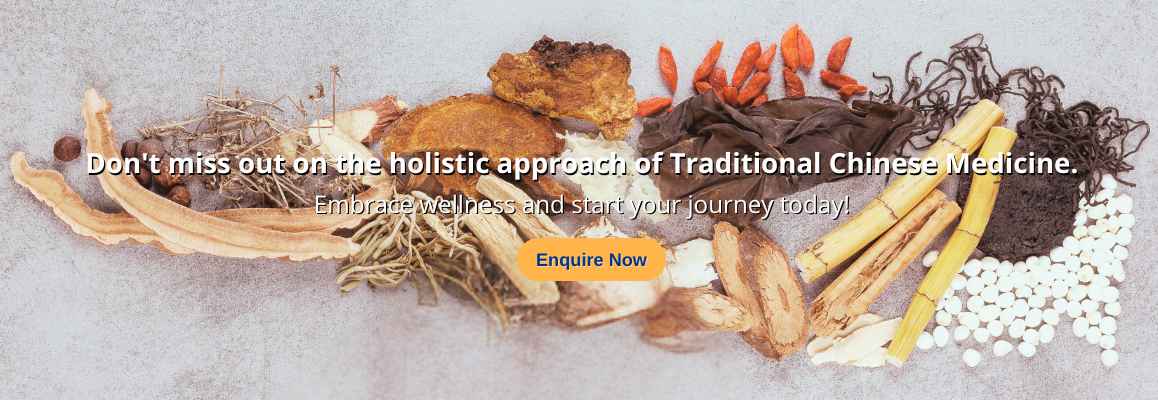
Dried rose has properties that help move stagnated Qi in the body. Dark leafy greens, black sesame, walnuts, goji berries, and mulberries are traditionally regarded as liver-nourishing foods in TCM. Warm, cooked meals are easier on the digestive system and less likely to generate the dampness that clouds the head. Eating regular meals at consistent times helps stabilise stomach qi and reduce headaches that are linked to irregular eating.
Water is essential – staying well-hydrated throughout the day, especially in Singapore’s heat, reduces the muscular and vascular contributors to tension headaches.
Physician Sue’s Clinical Perspective
It is often difficult to get away from the environment or unhealthy habits causing the tension headache. This is one pattern seen frequently among Singapore adults. These include patients who overwork, sleep poorly, eat irregularly, and drink large amounts of alcohol. Over years these habits have quietly depleted their liver yin and blood. They respond well to initial acupuncture sessions, but the relief does not last for long before the next wave of headaches come back.
As it is rarely practical to undergo acupuncture 3 times a week (a commonly recommended frequency in TCM studies), adding herbal medicine becomes important as it allows the body to consolidate the gains made through acupuncture. Patients are also encouraged to make small changes – cutting your workload immediately may not be workable, but taking small meaningful breaks in between to take a few deep breaths may be easier to do.
When to Go to A&E Instead of Seeking Tension Headache Treatment?
TCM is appropriate for the management of chronic, recurring tension headaches. But some headaches turn out to be medical emergencies. It is important to know the difference.
Go to A&E Immediately, or Call 995, If Your Headache:
- Comes on suddenly andthe pain is extremely severe (thunderclap headache)
- Is accompanied by a high fever, sensitivity to bright light, or confusion
- Follows a fall, accident, or head injury
- Comes with sudden vision changes, weakness in your face or limbs, slurred speech, or difficulty understanding people
- Gets progressively worse over hours and is accompanied by vomiting
- Is a completely new type of headache you have never had before
These warning signs are not typical of tension headaches or stress headaches. They may indicate serious conditions such as a subarachnoid haemorrhage, meningitis, or stroke. Do not delay treatment in these situations. Seek immediate medical attention at the hospital.
Frequently Asked Questions
What is the difference between a tension headache and a migraine?
A tension headache is a dull, pressing pain felt on both sides of the head, like a tight band around the skull. It does not throb and does not worsen with movement. A migraine tends to be one-sided, throbbing, and often comes with nausea, vomiting, or strong sensitivity to light and sound. In TCM, both are differentiated by pattern and meridian involvement, and the treatment approach differs accordingly.
Can stress really cause headaches every week?
Yes, it can. Prolonged stress causes the liver qi to stagnate in TCM, and that rising qi affects the head area, particularly at the temples and sides of the head. When stress is compounded by poor sleep, alcohol, and irregular eating, episodic headaches can become chronic, occurring fifteen or more days a month. Addressing the root stress response and the lifestyle patterns around it is essential for breaking this cycle.
How many TCM sessions does it take to see improvement for tension headache?
It depends on how long the headaches have been present. Patients with recent-onset headaches often notice improvement within three to five sessions. For those with chronic headaches present for months or years, a longer course is more realistic, typically six to twelve sessions combined with herbal support and lifestyle adjustments. Having prior medical conditions may also affect the recovery time. You may have a better idea of what to expect after your first consultation.
Are there specific foods that trigger tension headaches?
Yes. Alcohol is one of the most potent dietary trigger for many headache-prone patients. There are studies that link aged cheeses, cured meats and products high in tyramine as common triggers. In TCM, foods that generate heat or dampness aggravate headaches in people with a liver qi or heat pattern. These include highly processed food and deep-fried foods. Making dietary changes alongside treatment generally leads to better and more lasting outcomes.
When should I see a TCM physician instead of just taking paracetamol?
If your headaches are coming more than twice a week, affecting your sleep or ability to concentrate at work, or keep returning within a day or two of taking pain relief, it is worth getting a proper assessment. The same applies if headaches have been gradually getting more frequent or more severe over the past few months. Addressing the pattern early usually leads to faster recovery and more sustainable results.
Medically Reviewed by: Physician Sue Wan, BSc, BMed (Chinese Medicine)
About Singapore Paincare TCM Wellness
Singapore Paincare TCM Wellness is a registered TCM clinic at Marina Square (#03-134-136), Singapore. Part of the Singapore Paincare medical group, the clinic offers integrated TCM and wellness care through its proprietary Qi’Nergy treatment suite. We are open Monday to Sunday, inclusive of public holidays. Book an appointment with us now, call +65 6266 2168 or WhatsApp us at +65 9824 1758.
About Our Physician